OPML Blogrolls: The Retro Web Tactic Generating Backlinks in 2026
OPML blogrolls are a rediscovered web standard that creates reciprocal link networks between quality sites. Here's how to build a blogroll that generates backlinks and entity signals.
In the early web, every blog had a blogroll — a sidebar list of other blogs the author read and recommended. The blogroll died during the SEO era because link builders abused it. Google devalued reciprocal links. Blogrolls became unfashionable. Everyone moved to social media for content discovery.
Now blogrolls are coming back. The indie web movement, the fediverse, and a growing rejection of algorithm-driven discovery have revived interest in human-curated blog recommendations. And the modern version — powered by OPML files and machine-readable formats — is more powerful than the sidebar lists of 2005.
I built OPML blogrolls for every site in our 52-site network. Each blogroll lists 15-25 quality sites in the same niche. Several of those sites reciprocated, creating a network of contextually relevant backlinks that also serves as a genuine discovery tool for readers.
What OPML Is
OPML (Outline Processor Markup Language) is an XML format originally designed for exchanging lists of RSS feeds between feed readers. It is the standard format for importing and exporting blog subscriptions. Every RSS reader — Feedly, Inoreader, NewsBlur, NetNewsWire — supports OPML import and export.
An OPML blogroll is an OPML file that lists blogs you recommend, along with their RSS feed URLs. When published on your website, it serves two purposes:
- Human discovery — readers can browse your recommendations and find new blogs
- Machine-readable subscriptions — readers can import your entire blogroll into their RSS reader with one click
The OPML file is hosted on your site (e.g., yourdomain.com/blogroll.opml) and linked from your blogroll page. It looks like this:
<?xml version="1.0" encoding="UTF-8"?>
<opml version="2.0">
  <head>
    <title>The Condo Trap Blogroll</title>
    <ownerName>J.A. Watte</ownerName>
    <dateModified>2026-06-01</dateModified>
  </head>
  <body>
    <outline text="Real Estate Analysis">
      <outline text="CalculatedRisk" type="rss"
        xmlUrl="https://www.calculatedriskblog.com/feeds/posts/default"
        htmlUrl="https://www.calculatedriskblog.com/" />
      <outline text="Wolf Street" type="rss"
        xmlUrl="https://wolfstreet.com/feed/"
        htmlUrl="https://wolfstreet.com/" />
    </outline>
    <outline text="Personal Finance">
      <outline text="Mr. Money Mustache" type="rss"
        xmlUrl="https://www.mrmoneymustache.com/feed/"
        htmlUrl="https://www.mrmoneymustache.com/" />
    </outline>
  </body>
</opml>
Why Blogrolls Generate Backlinks
The blogroll creates a natural reciprocity mechanism. When you add a quality blog to your blogroll, the author notices — either through referral traffic, backlink monitoring, or direct notification. Many authors reciprocate by adding your blog to their own blogroll.
This is not the manipulative reciprocal linking that Google penalized in the 2010s. The difference is context and quality:
- Manipulative reciprocal links: two unrelated sites exchanging links purely for PageRank
- Blogroll reciprocity: niche-relevant sites recommending each other to their audiences as genuine editorial choices
Google's own documentation distinguishes between manipulative link schemes and natural cross-references between related sites. A blogroll of curated, niche-relevant recommendations is an editorial choice, not a link scheme.
Building an Effective Blogroll
Curate Genuinely
Only include blogs you actually read or would recommend to a reader. A blogroll of 100 random sites in your niche is transparent link farming. A blogroll of 15-25 quality sites that you have a genuine relationship with — even if that relationship is just "I read their content regularly" — is a legitimate recommendation.
Organize by Category
Group your blogroll by topic subcategory. For a real estate blogroll:
- Market Analysis — data-driven sites covering market trends
- Investment Strategy — sites focused on real estate investing approaches
- Personal Finance — broader financial planning sites with real estate coverage
- Industry News — publications covering real estate policy and regulation
Categories help readers find relevant blogs and demonstrate that your curation is thoughtful.
Include Both Large and Small Sites
Mix established authorities (CalculatedRisk, Wolf Street) with smaller independent blogs. This gives your blogroll credibility (readers recognize the big names) while also creating reciprocity opportunities with smaller sites that are more likely to link back.
Create a Dedicated Page
Host your blogroll on a dedicated page (e.g., /blogroll/) with:
- A brief explanation of what the blogroll is and how you selected the sites
- The list of recommended blogs with descriptions
- A link to the OPML file for one-click RSS import
- An invitation for readers to suggest additions
Notify Listed Sites
After publishing your blogroll, email the authors of listed sites with a short notification: "I added your blog to my blogroll at [URL]. I've been reading your work on [topic] and think my readers would benefit from it. No response needed — just wanted you to know."
This is not a link exchange pitch. It is a genuine notification. Approximately 30-40% of notified authors will check your site, and a meaningful percentage will reciprocate by adding you to their own blogroll or mentioning you in content.
The Network Map Effect
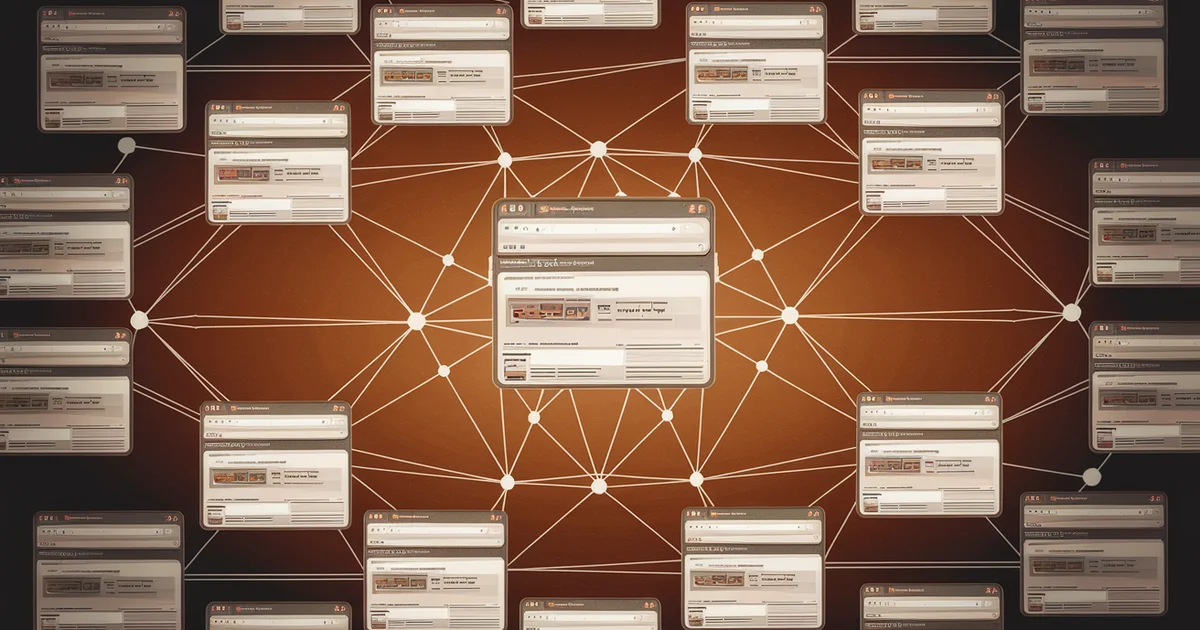
When multiple sites in a niche maintain blogrolls, the cross-references create a network map that search engines can use to identify topical clusters. Google's Knowledge Graph builds entity relationships partly through link patterns — sites that consistently cross-reference each other within a topic area are recognized as a topical community.
For our 52-site network, the internal blogrolls create a visible web of connections between all seven book sites and the niche sites that cover related topics. This cluster signal reinforces the topical authority of each individual site.
OPML and the IndieWeb
The blogroll revival is part of the broader IndieWeb movement — a community advocating for personal websites, open standards, and decentralized web infrastructure. IndieWeb protocols like Webmention and Microsub integrate with OPML blogrolls to create a social discovery layer that works without centralized platforms.
Participating in IndieWeb practices (blogrolls, webmentions, rel="me" links) signals to both humans and machines that your site is part of a web of authentic, independent publishers — not an isolated SEO content farm.
Measuring Blogroll Impact
Track these metrics after launching your blogroll:
- Referral traffic from reciprocating sites — direct evidence that the blogroll generated inbound links
- New backlinks from blogroll domains — monitor in Google Search Console or Ahrefs
- Blogroll page engagement — time on page and clicks to recommended sites indicate reader interest
- OPML download count — if trackable, shows how many readers imported your recommendations into their feed readers
In our network, blogroll pages generate modest but consistent referral traffic. The primary value is not traffic volume — it is the quality and permanence of the reciprocal backlinks. Each blogroll link is contextually relevant, editorially placed, and permanent (blogrolls are rarely removed once published).
Getting Started
- List 15-25 blogs you genuinely read or respect in your niche
- Create a blogroll page on your site with descriptions and links
- Generate an OPML file listing the same blogs with their RSS feed URLs
- Link the OPML file from your blogroll page
- Notify listed authors via email
- Update the blogroll quarterly with new discoveries and removals
Total setup time: 1-2 hours. Quarterly maintenance: 30 minutes.
Blogrolls are not a high-volume traffic strategy. They are a trust and authority strategy. In a web increasingly dominated by AI-generated content and algorithmic discovery, human-curated recommendations carry more weight than ever — with readers, with search engines, and with AI models evaluating source credibility.
For the complete authority-building strategy for real estate content, see The Condo Trap and The $100 Dollar Network.